First Grade Newsletter
feed-them-social-combined-streams domain was triggered too early. This is usually an indicator for some code in the plugin or theme running too early. Translations should be loaded at the init action or later. Please see Debugging in WordPress for more information. (This message was added in version 6.7.0.) in /home/stage-westminsterschool/htdocs/stage.westminsterschool.com/wp-includes/functions.php on line 6114tickera-event-ticketing-system domain was triggered too early. This is usually an indicator for some code in the plugin or theme running too early. Translations should be loaded at the init action or later. Please see Debugging in WordPress for more information. (This message was added in version 6.7.0.) in /home/stage-westminsterschool/htdocs/stage.westminsterschool.com/wp-includes/functions.php on line 6114genesis domain was triggered too early. This is usually an indicator for some code in the plugin or theme running too early. Translations should be loaded at the init action or later. Please see Debugging in WordPress for more information. (This message was added in version 6.7.0.) in /home/stage-westminsterschool/htdocs/stage.westminsterschool.com/wp-includes/functions.php on line 6114education domain was triggered too early. This is usually an indicator for some code in the plugin or theme running too early. Translations should be loaded at the init action or later. Please see Debugging in WordPress for more information. (This message was added in version 6.7.0.) in /home/stage-westminsterschool/htdocs/stage.westminsterschool.com/wp-includes/functions.php on line 6114Northern Virginia Private School
8:30-8:40
Opening
8:40-9:35
Reading Readiness/Reading
9:40-10:05
French (3 times a week)
10:05-10:20
Handwriting
10:22-10:44
Recess
10:45-11:20
Math
11:50-12:20
P. E. (every day)
12:20-12:40
Bathroom/Drink Break
12:40-1:15
Social Studies/Great Books
1:15-1:45
Quiet Time
1:50-2:30
Art or Music (Each meets twice a week)
2:30-2:45
Recess
2:45-2:55
Prepare to Go Home
3:00
Dismissal
Since 1998, Westminster School has been a fully accredited member of the Virginia Association of Independent Schools (VAIS). Membership is open only to not-for-profit schools that meet the standards listed at the bottom of this article. Determination that the school meets the Standards for Membership is accomplished through ongoing self-review and reporting on the part of Westminster School and regular, rigorous examination by VAIS.
In Spring 2018, Westminster School underwent a major (10-year) review by VAIS. The school was asked to provide an overview of the school plus an in-depth report on the current status and strategic planning in several areas, including school programs, financial management, marketing and development, facilities, and technology. Reporting included the sharing of approximately 164 documents, including the master curriculum guide, crisis management plan, sample publications, minutes from meetings of the Board of Trustees, and the school’s five-year strategic plan, to name a few. After studying the school’s self-study report and all submitted documents, a Visiting Team comprising administrators from other VAIS member schools visited the Westminster School campus for three days, conducting a thorough review of daily school activities plus interviews with trustees, administrators, teachers, parents, and students. The Visiting Committee then voted on each Standard for Membership and submitted a report on the entire process to the VAIS Committee on Membership.
Westminster School is pleased to affirm that the Committee on Membership voted unanimously to continue Westminster’s status as a fully accredited member of VAIS. The school is also proud of the many commendations shared by the Visiting Committee in its Executive Summary report, including the following excerpts.
Outsiders considering the classical approach as an anachronism in the haze of a digitally-charged world will find that very haze dispelled . . . Over five decades, students have moved through the school as scholars, poets, thespians, artists, and musicians. The very walls of the School expose and celebrate not just the possibilities in a child’s imagination, but transmit an essential message that Westminster School is child-centered, richly folding in tenets of the Western experience. It is first and foremost in the daily habits; it is clear and purposeful in its results.
This clarity of purpose is understood seamlessly by the faculty, administration, and parents. This “Golden Triangle” finds at its center, the student, the child, the human being. It is as holistic as it is humane. The eye-to-eye contact in every greeting and the quiet work of picking up a piece of paper when no one is looking speak to the authenticity of Westminster’s mission. It is a formidable educational environment shaped and informed on proven practices over its five decades.
1. The School’s mission guides its policies and practices and is evident in the climate, culture, and program of the School.
2. The program fulfills the educational and developmental needs of the students, meets the requirements of learning and living in a diverse and globally-connected society, and reflects ongoing internal review.
3. The School authentically communicates its mission and values, creating a community that understands and supports the mission while engaging in the life of the School.
4. The faculty, administration, and staff support the mission of the School, are qualified for their positions, engage in ongoing evaluation and professional growth, and effectively implement the program.
5. The Head of School serves as the chief executive, is the sole employee of and only direct report to the governing body, and is ultimately responsible for the operational and educational management of the school.
6. The governing body of the School is independent and deliberative, with clearly defined roles and responsibilities, and works in partnership with the Head of School to ensure that fiduciary and strategic policies advance the school.
7. The governing body and the Head of School jointly assure that the financial resources are sufficient to sustain the program and are efficiently managed.
8. The School’s facilities and equipment are sufficient to meet the needs of the program and are maintained to provide an effective and safe learning environment.
9. The School’s care for the health, safety, and welfare of the students is evident in its policies and practices.
10. [IF APPLICABLE] The residential program is so conceived and staffed as to reflect the mission of the school and provide a healthy and safe environment.
11. [IF APPLICABLE] The preschool and/or extended day program is conceived and staffed so as to reflect the mission of the School and provide a healthy, safe, and developmentally appropriate environment.
12. The faculty, administration, and staff support the mission of the School, are qualified for their positions, engage in ongoing evaluation and professional growth, and effectively implement the program.
The best way to capture moments is to pay attention. This is how we cultivate mindfulness. Mindfulness means being awake. It means knowing what you are doing.
– Jon Kabat-Zinn
The movement of mindfulness has made its way to education and into schools worldwide. What exactly is mindfulness, and what true benefits does it have to our students? Is it just the new buzzword in education, or is mindfulness around to stay? Those who have learned to zero in on the present moment are finding that, although sometimes difficult, being mindful can help both children and adults achieve more of an overall life balance.
Mindfulness is truly needed in education for many reasons, and educators are seeing the direct benefit to their students. According to mindfulschools.org, “Toxic stress impairs attention, emotion, and mood regulation, sleep, and learning readiness daily in American classrooms.” When students and educators practice “taking a moment,” pay attention to their breathing patterns, and visualize positive outcomes, their stress levels are significantly reduced.
“A moment-by-moment awareness of our thoughts, emotions, sensations, and surrounding environment,” is how mindfulschools.org defines mindfulness. In conjunction with mindfulness, they explain heartfulness as “the intentional nurturing of a positive mind such as kindness and compassion.” When mindfulness and heartfulness are practiced, the end result is a calmer and more productive person.
An article that appeared in The Atlantic entitled, “When Mindfulness Meets the Classroom,” explains mindfulness to be a secular philosophy adapted from Buddhist meditation traditions that have only recently come to our attention. However, the research is mostly in support of teaching at least some mindfulness techniques to children and adults alike in order to “improve attention, reduce stress, have better emotional regulation, and an improved capacity for compassion and empathy.” Brain scans are also supporting these findings.
What other ways can mindfulness help children? According to The Atlantic article, mindfulness is the “foundation of good character, resilience, and long-term life fulfillment. It is this part of the mind that mindfulness seeks to address.”
Intrigued? Interested? Give a mindfulness exercise a try. Here are a few from pocketmindfulness.com:
This exercise can be done standing up or sitting down, and can pretty much be done anywhere at any time. All you have to do is be still and focus on your breath for just one minute.
Start by breathing in and out slowly. One cycle should last for approximately six seconds. Breathe in through your nose and out through your mouth, letting your breath flow effortlessly in and out of your body.
Let go of your thoughts for a minute. Let go of the things you have to do later today or pending projects that need your attention. Simply let yourself be still for one minute.
Purposefully watch your breath, focusing your senses on its pathway as it enters your body and fills you with life, and then watch it work its way up and out of your mouth as its energy dissipates into the atmosphere.
This exercise is simple but incredibly powerful. It is designed to connect us with the beauty of the natural environment, something that is easily missed when we are rushing around in the car or hopping on and off trains on the way to work.
Choose a natural object from within your immediate environment and focus on watching it for a minute or two. This could be a flower or an insect, or even the clouds or the moon.
Don’t do anything except notice the thing you are looking at. Simply relax into a harmony for as long as your concentration allows. Look at it as if you are seeing it for the first time. Visually explore every aspect of its formation. Allow yourself to be consumed by its presence. Allow yourself to connect with its energy and its role and purpose in the natural world.
How are schools incorporating mindfulness? Some schools are making a deliberate effort to educate teachers, students, and parents about mindfulness. At Westminster School, a recently built-in “flex” period allows teachers to instruct students on the benefit of living in the present moment, breathing, meditating, and being still. A focus has been placed on living a harmonious and balanced life, and students are being discouraged from picking up screens as their go-to habit. Classes in the arts are all about mindfulness, as painting, learning to read music, singing, drawing, and acting are all activities in which students must slow down and focus their attention and energy. Daily recess and physical education, which are becoming obsolete in some schools, help relieve stress and tension, which leads to a calmer, happier child–and one who is better able to be attentive and cooperative in the classroom.
It will be interesting to see how influential the mindfulness movement will become in education. As the world grows busier and more demanding of individuals, it seems logical that people will seek out practices that can help them relieve stress and become more present, more balanced, and more joyful. With more and more children learning the concept and practice of mindfulness, it can only lead to more adults finding that balance that will lead to a better life.
With Fairfax County’s school system touted as one of the best in the country, why is your child not receiving the attention that he/she needs during this critical time of development?
Parents may not realize that their child’s daily school experience from preschool through middle-school is more profound, transformative, and lasting than that of high school and college combined! The period from age 3 to 14 is all about development, and a child’s experience during these formative years literally shapes him/her and becomes part of who he/she is.
The school year is well under way, and what has your child’s experience been like thus far?

Let’s face it, public schools are overcrowded and pressed to educate hundreds of thousands of children with a myriad of needs and limitations, while lacking adequate resources. Although many public school teachers are passionate and caring, they are required to conform their teaching to a particular educational program, then drop that in order to implement the next trend. These realities lead to frustrated teachers, students, and parents.
By contrast, private school classes are small—15-18 students, on average. Private schools don’t have to sway to the latest educational trends, but have the freedom to deliver the most effective program for their students. And teachers are able to direct their passion and talent, as well as valuable instruction time, to effective teaching using a variety of creative and inspirational methods. Independent school educators are trained to teach holistically, and are focused on all facets of each child’s development—intellectual, social/emotional, physical, and spiritual.
Westminster School is committed to graduating students who are the most radiant expressions of their best possible selves—the selves that they were destined to be and have every right to become. We are confident in our mission to create outstanding, motivated, successful, creative, innovative leaders of the future. To learn more, request a copy of The 11 Biggest Mistakes Parents Make When Planning Their Child’s Education.
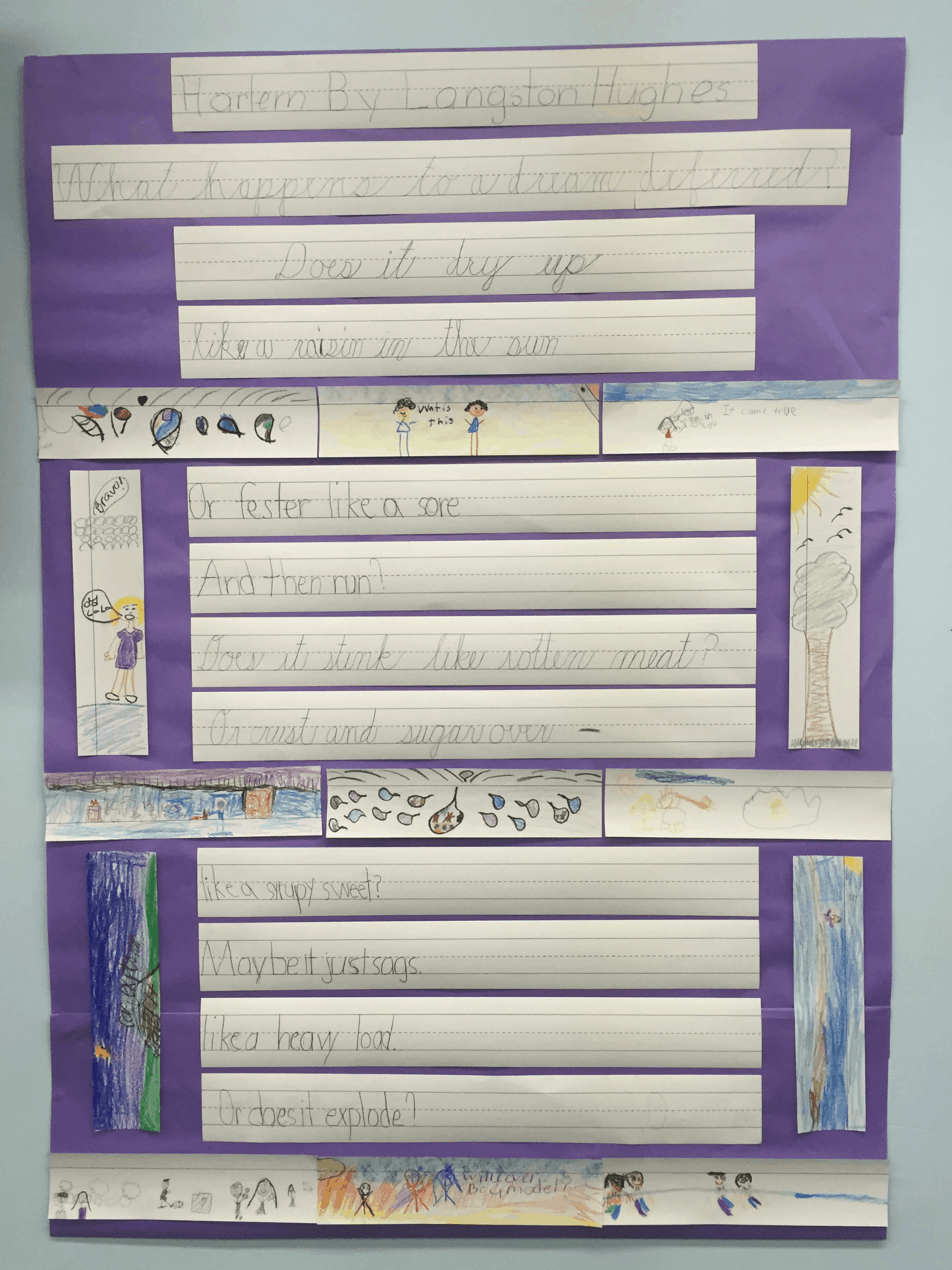
What happens to a dream deferred? This complex question was put to our Kindergarten, First Grade, and Second Grade students during flex period in February. Would you fight for your dream? Would you let it wither away?
In honor of Black History Month, the students explored the famous Langston Hughes poem, “Harlem.” Although the students had already studied poems during flex period, this poem was a step up in terms of its elevated themes and subject matter. The students realized the great emotion contained in the poem, and it caused some serious contemplation and reflection after some discussion.
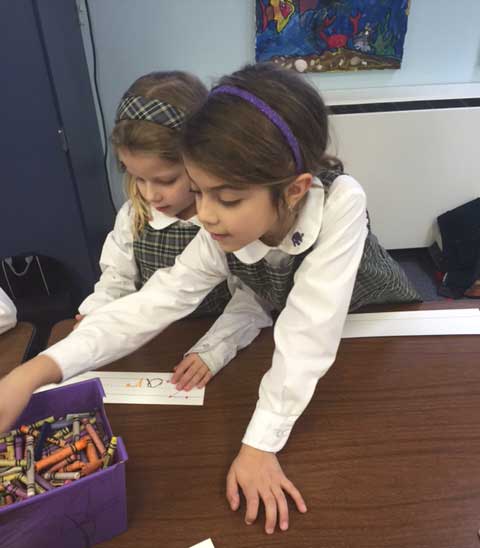
One student shared with the group, “I think ‘Harlem’ tells the story of how hard life was for African-Americans in the past. Maybe they were told their dreams could never come true.” As the students learned about Martin Luther King, Jr. and Rosa Parks, they began to make connections between the information they have learned and the strong feelings expressed in the poem.
Miss Deddo led the group discussions and had the students illustrate, write, and post the poem as a culminating activity. “Thanks to these leaders that have come before us, like King and Parks, there is no dream unachievable for our students. They do not have to question what they can achieve, they just have to decide how hard they are willing to work for it. This poem helped students from all different backgrounds consider their dreams and imagine them coming to light. I was proud to be there when this happened,” Miss Deddo said.
At the very heart of a Westminster education is the study of history and the ancient civilizations that contributed so much to our own, modern way of life. To fully understand and appreciate one’s own culture, and in order to further intellectual development, the study of ancient history is critical.
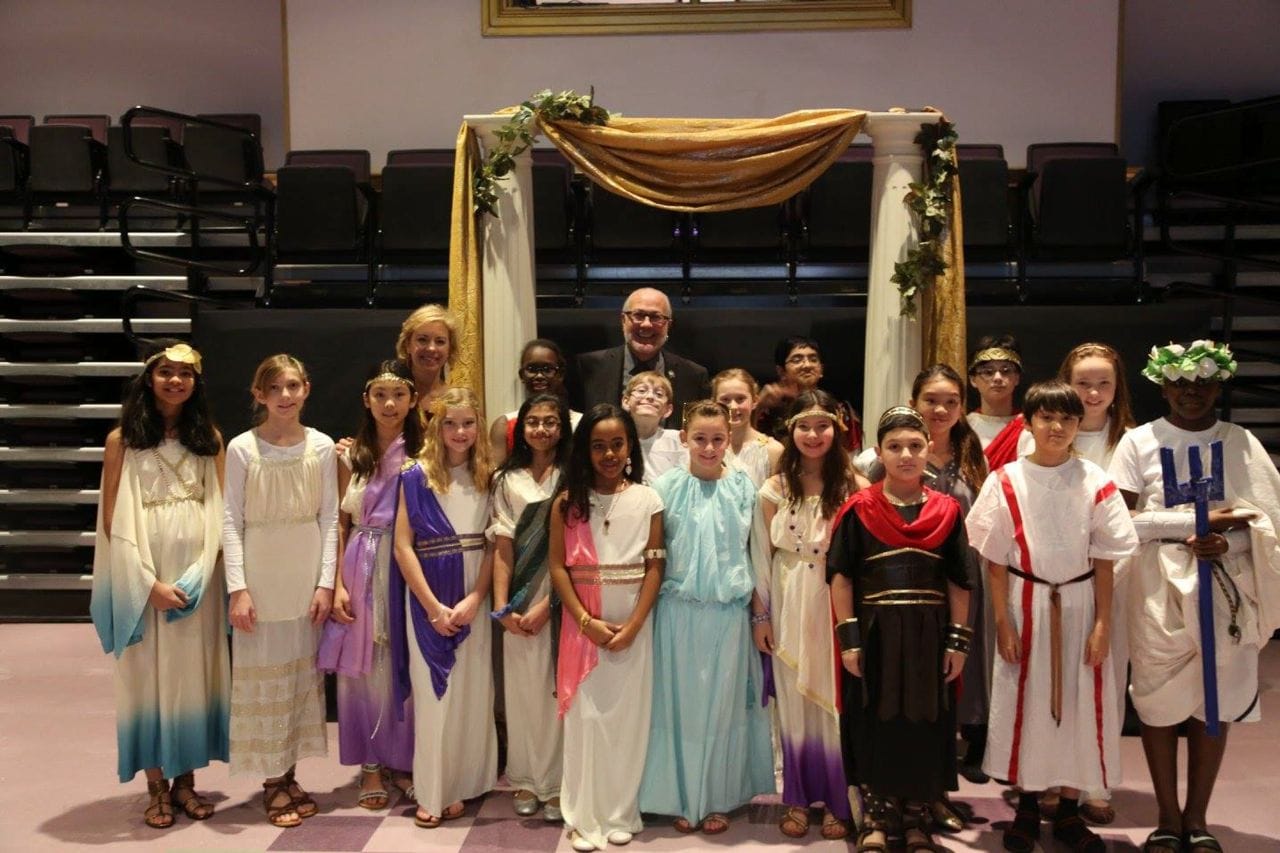
Starting with the earliest western civilizations, Westminster students learn about the great achievements of humanity–the ideas and inventions, language development, beliefs and rituals, history-changing events, and daily life that characterize each culture. One day of the year, the classes get together, under the leadership of their history teachers, to celebrate the civilization that they have studied in depth that year.
“If you don’t know history, then you don’t know anything. You are a leaf that doesn’t know it is part of a tree.” – Michael Crichton
Egyptian and Roman Days both took place in March this year, and the students got to spend an entire day immersed in the respective culture. The ancient-citizens-for-a-day relished a sumptuous feast, authentic and delicious, and enjoyed trying new foods as well as favorites. The Ancient Egyptians (3rd graders) got the chance to “dance like an Egyptian,” and create Egyptian-style art projects to round out the day. For example, students crafted their own necklaces using string, beads, and paper, which were transformed into colorful images of magic charms and religious amulets. The 3rd-graders also learned about senet, one of the world’s oldest board games, which incorporates Egyptian mythology and iconography in its gameplay.
The students first created their own senet boards and then challenged their classmates to a round of the luck-based game.
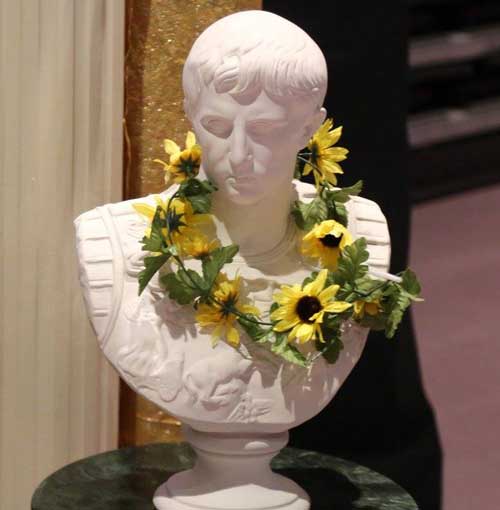
The 5th-grade Romans likewise engaged in art projects and activities that helped bring this ancient civilization to life. After making garland headpieces to enhance their costumes, the students created Roman shields inspired by their studies of the all-conquering Roman Army. In the spirit of ancient home life, the students crafted mosaic terra cotta pots. A game of Roman ball rounded out the day, which ended with a movie, David Macauley’s “Roman City.”
These history days are just a few of the special experiences given to Westminster students. Not only do they provide lifelong memories, they also bring the vivid past alive in the present.
Worried about cuts to Fairfax County Public School budget? Crowded classrooms? Teachers straining to meet widely varying needs of students? Lack of individual attention for your child? Missing art, music, drama, and daily PE programs? Check out Westminster School, whose well-rounded, rich program includes small classes, excellent academics, values and character building, daily PE and athletics, and a deep commitment to arts education for all students.
Fairfax County Public School (FCPS) officials recently warned of yet more cuts to school programs due to a projected funding shortfall of $50 to $100 million (The Washington Post, 8/04/15). In addition to past program cuts, the school board is considering adding yet more students to already crowded classrooms, cutting pre-school and full-day kindergarten programs, and “eliminating high school sports . . . axing activities such as yearbook and student newspapers, curtailing music and drama programs, and reducing middle school after-school activities.” While not all of these proposals may come to pass, FCPS Superintendent Karen Garza has said, “the school system is going to have a hard time providing necessary services.”
Many parents who chose to live in Fairfax County due to the high reputation of its public schools have grown increasingly disappointed and worried about the quality of their child’s education and daily experience at school. Who can blame them? An elementary-grade teacher recently hired by Westminster School shared with us that, in her former position with FCPS, she had 31 students in her class and was expected to teach all academic subjects to students grouped for four different learning programs. In other words, every day she had to create and deliver at least two different lesson plans for each subject she taught. She is so grateful to now be at Westminster School, where she specializes in one subject (math) and teaches 12 students at a time. At last, she feels able to do what she has always wanted to do and been trained to do—not struggle to meet widely varying needs of too many students, but to really teach!
All parents want the best education for their children and many think that public schools can provide it, but they may not understand the scope of public school problems or realize what is possible for their child (see The 11 Biggest Mistakes Parents Make). Daily headlines underscore the problems found in public schools: limited, repetitive curricula that “teach to the test,” one-sided programs for the “gifted and talented,” funding shortfalls that deprive students of necessities and limit enrichment opportunities, overwhelmed teachers, discipline issues, frequent changes in educational approach, and the undermining effects of state and national political struggles. In contrast, Westminster School has the independence and the means to give all of its students the diverse, in-depth, and challenging education that they need to become critical thinkers and to grow as individual learners. Small class sizes with specialized teachers mean more one-on-one attention and greater depth of learning, while a consistent, school-wide value system helps parents teach their children important values—such as kindness, respect, and responsibility—that they will carry with them for the rest of their lives.
Westminster School recognizes the importance of the elementary and middle-school years, when children are shaped by their environment and experiences into the people that they are going to be. Westminster’s carefully structured, rich program partners with parents to guide the child’s development in all areas, to help him/her become the best possible version of him/herself. Maybe that’s what has attracted such a diverse community to Westminster, where students represent an impressive array of races, religions, and places of origin.
A relatively low tuition compared to other private schools, and a substantial financial aid program make a Westminster education possible for a wide range of families. Contact Westminster School for more information, schedule a tour, or attend an open house. In a region as prosperous as Fairfax County, you shouldn’t have to settle for less than the best, and neither should your child.
