Current Issue
Past Issues
Click on the image to view the magazine.

feed-them-social-combined-streams domain was triggered too early. This is usually an indicator for some code in the plugin or theme running too early. Translations should be loaded at the init action or later. Please see Debugging in WordPress for more information. (This message was added in version 6.7.0.) in /home/stage-westminsterschool/htdocs/stage.westminsterschool.com/wp-includes/functions.php on line 6114tickera-event-ticketing-system domain was triggered too early. This is usually an indicator for some code in the plugin or theme running too early. Translations should be loaded at the init action or later. Please see Debugging in WordPress for more information. (This message was added in version 6.7.0.) in /home/stage-westminsterschool/htdocs/stage.westminsterschool.com/wp-includes/functions.php on line 6114genesis domain was triggered too early. This is usually an indicator for some code in the plugin or theme running too early. Translations should be loaded at the init action or later. Please see Debugging in WordPress for more information. (This message was added in version 6.7.0.) in /home/stage-westminsterschool/htdocs/stage.westminsterschool.com/wp-includes/functions.php on line 6114education domain was triggered too early. This is usually an indicator for some code in the plugin or theme running too early. Translations should be loaded at the init action or later. Please see Debugging in WordPress for more information. (This message was added in version 6.7.0.) in /home/stage-westminsterschool/htdocs/stage.westminsterschool.com/wp-includes/functions.php on line 6114Northern Virginia Private School
Click on the image to view the magazine.
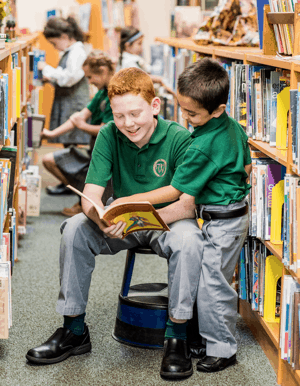
American children are growing up in the digital age. Many of them spend hours a day looking at screens, including at many schools. On their own time, they dive into the superficial topics and trends of social media and gather information from unverified and often inappropriate online sites. They devote countless hours to video games. A recent, multiyear study by the American Psychological Association shows that high-school-aged teens spend more time texting and on social media (average, 4 hours a day) than reading (average, 19 minutes a day). In short, screens foster lazy minds, trained to receive the products of someone else’s thoughts, efforts, and imagination. As a result, parents, teachers, and psychologists are finding increasing problems among children, including moody behavior, shorter attention spans, decreased ability to focus on academics, and a lessening in empathy for others.
Classical education provides the antidote to every one of these alarming trends. Classical education is a systematic, age-appropriate approach to teaching children how to think, how to build values and develop strength of character, how to discover and improve on individual talents, and how to present themselves successfully in the greater world. Classical education’s building- block approach to learning, and its emphasis on the skills and tools of learning nurtures the child’s interest in learning, ability to concentrate and pay attention for extended periods of time, read for depth of understanding, and express his/her thoughts and opinions clearly and persuasively. Its spotlight on the great achievements of civilization engages the child emotionally and morally, as well as intellectually. Instead of receiving the flow of digitized information, the child’s mind is actively and imaginatively engaged in learning.
Language is the foundation of thought, and a classical education fosters a deep understanding of words and appreciation for literature, especially classic works that challenge and enrich the reader. There is a corresponding emphasis on articulate speech and writing, communication skills in high demand by employers in every field.
Ultimately, the goal of a classical education is to teach the student how to think critically and act creatively, how to tackle and solve unfamiliar problems, and how to meet challenges with optimism and set-backs with resilience. These are the very skills that
prepare children for a challenging and unpredictable future. These are the skills demanded in every field of endeavor, including the much-lauded STEM jobs (Science, Technology, Engineering, Math).
There is no magic bullet, quick fix, or online, digital course that produces a well-rounded, knowledgeable, capable, confident person of good character. But, there is a proven way, and Westminster School stands by its 56-year history of delivering a classical education in a nurturing, forward-looking environment. The academic program coupled with the emphasis on the arts at Westminster combine to create a unique educational experience for children in preschool-8th grade. The achievements of our graduates, both academic and personal, testify to the effective and lasting influence of a rich, carefully designed, and well-implemented classical education.
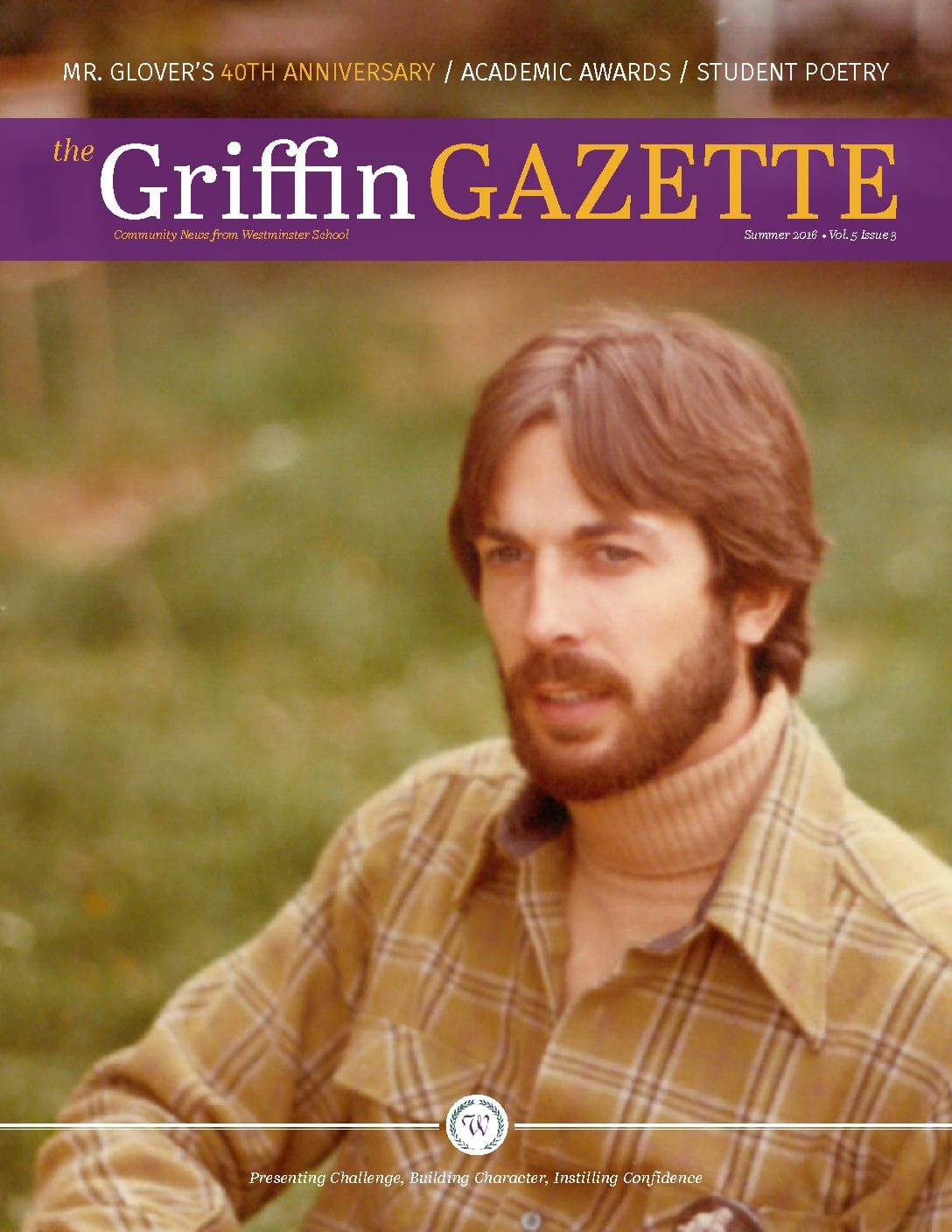
Westminster School offers the most dynamic kindergarten experience in Northern Virginia. Our carefully designed program, delivered by knowledgeable, dedicated, and creative teachers, ensures that each student receives the individual attention and encouragement that he/she needs to grow and thrive in school and in life. The daily schedule is engaging, well-rounded, and consistent, and the school environment is orderly, loving, and encouraging. Westminster Kindergarteners feel safe, confident, and excited to come to school each day. Friendships abound in our diverse and welcoming community.
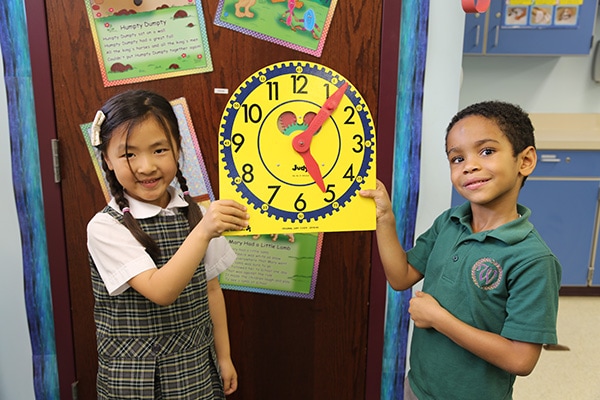
Westminster’s Kindergarten program is rich and varied. Through daily lessons, hands-on exploration, creative projects, technology, field trips, and participation in many special activities and events, our Kindergartners dive into an exciting learning adventure. Young students are able to succeed in our advanced academic curriculum because of the small class sizes (student:teacher ratio = 10:1) and the carefully designed, time-tested methods used. Our teachers are subject specialists who love what they teach and match the curriculum to a variety of learning styles. Twice-weekly art and music classes, drama, French, and daily P.E. help children blossom into engaged, creative, and confident scholars. They are encouraged and shown how to be respectful, responsible, kind, and courteous. This all-around academic and personal development is cultivated throughout the Westminster program (grades K – 8), and our graduates go on to attend an array of well-regarded high schools.
Doesn’t your child deserve the strongest possible start as he/she begins the journey of a lifetime?
We invite you to visit Westminster School and see for yourself how we implement this unique program. We look forward to meeting and welcoming you in person.
Westminster School
Established 1962
Presenting Challenge | Building Character | Instilling Confidence
Kindergarten
In language arts, the students have finished learning the alphabet and are now learning to create their own short vowel words. The class is getting ready for the first grade by using smaller pencils and crayons, completing morning work, and writing full headings on their work.

First Grade
First-grade reading brings many new challenges and rewards! First graders have put new knowledge of vowel and consonant digraphs to good use while reading longer and more complex stories. They love reading about Frog and Toad’s adventures! The projects students created during Language Arts Weeks taught them about origin myths. First grade read several origin myths together, discussed them, and then wrote their own origin myths about clouds! The fascinating stories were presented in the hallway on creative cloud mobiles.
Second Grade
Second graders were thrilled to finally begin to learn cursive in the second quarter. Students discovered the value of discipline and attention to detail as they meticulously learned the strokes that combine to form each letter of the cursive alphabet. The second graders have also mastered all verb tenses: past, present, and future. Second graders have also been learning about the different parts of a paragraph. From topic sentences to supporting details, concluding sentences, and even indenting, they know how to do it all! In the second quarter, students finished Caleb’s Story and moved right into Mr. Popper’s Penguins. The students have thoroughly enjoyed reading about all of Mr. Popper’s silly antics. In the upcoming months, the second graders are looking forward to learning how to make their paragraphs really pop with the use of adverbs, adjectives, and different types of punctuation.
At the beginning of the second quarter, the second graders took a trip to The Griffin Academy to demonstrate their reading skills to their preschool buddies. Everyone had a great time learning and playing with their new friends.
Third Grade
During the second quarter, the third grade was immersed in the study of descriptive language. Mimicking the writing style of George Selden, students learned to use sensory detail, as well as simile and metaphor to describe the busy setting of a novel, The Cricket in Times Square. The children created their own travel guide for the “little critter,” as told by the main characters of the novel. Taking on the point of view of Chester Cricket, the students wrote their first impression of Times Square in a letter to a friend. They planned an exciting day, listing all the attractions Times Square has to offer for a little critter, in Tucker’s inside guide. The students’ advertisements for Chester’s concerts compared his music to the sounds of birds tweeting or the peaceful hum of a flowing river.
Fourth Grade
During the second quarter, the fourth grade worked on their English projects and focused on analyzing characterization in the novel, The Borrowers. The fourth-grade students wrote their first five-paragraph essay, in which they explained how the author revealed the characters’ traits by what they say, think, do, and feel, as well as what others say about them. In their study of literary devices, the children learned how the author, Mary Norton, crafted a complex and exciting story. Mary Norton structures The Borrowers as a framed story and uses cliffhangers and symbolism to intrigue and interest the reader.
Fifth Grade
After finishing Where the Red Fern Grows, the fifth grade had the opportunity to pick out their literature choices and unfold the various narratives on their own. With an opportunity to display their knowledge, students began the greatly anticipated Just So Stories, which they also brought to life on stage through their class play. Rudyard Kipling’s whimsical characters and humorous language prove to be a delight in the classroom as students discover together the tall tales behind various animals’ histories. Students are also enjoying the opportunity to engage the story on their own terms through a reading journal project that allows them to experience some of the joy that comes with creating their own material.
Besides the literature, students have been pushing forward in grammar as well, finishing up the verb unit and moving on into the realm of pronouns. Equipped with their newfound knowledge, students should be able to avoid the common pitfall of confusing subject and object pronouns. Ideally, Kipling’s verbal mastery displayed in his stories will underscore the reward that can accompany dedicated grammatical practice, and together we will hone our voices and express ourselves elegantly.
Sixth Grade
Sailing on from the debased world of pitfalls, piracy, and false profit in Treasure Island, the sixth grade has had the pleasure of encountering another unsavory character through Dickens’s A Christmas Carol. Students got into the spirit of the season as they witnessed Ebenezer Scrooge’s transformation from a bitter miser to a kindly, charitable gentleman. The class had the opportunity to engage the story through a project as well, choosing one of the spirits from the story and spinning an essay in that character’s voice. Finally, the boys and girls had the chance to see the story through live faces and voices on the stage of Ford’s Theatre—an amazing opportunity that transported students to the streets of London alongside Scrooge.
As they move forward in grammar, the sixth graders now work to master the world of modifiers. While working through the unit, they will develop a fuller understanding of those words used for capturing the essence of their world, enriching their own writing and descriptions. Besides developing knowledge of descriptive words, the students are learning the finer points of persuasive writing as well as discovering the ways an author can influence his or her audience.
Seventh Grade
In the second quarter, the seventh graders have completed study of medieval literature and the Romantic Movement in poetry. Their creative original poems provided colorful and meaningful decoration for the walls of Westminster School, and their poem explications demonstrated the depth of their insight into classic poets’ works. Meanwhile, in Shakespeare class, they are continuing to explore the Bard of Avon’s great works, focusing on appreciating the humorous situations of A Midsummer Night’s Dream, along with comprehending its more profound messages about human emotion. Shakespeare class will conclude with a discussion of history plays, parallel to a brief study of the current historical controversy surrounding the Bard of Avon, the authorship question. In English class, students will complement these studies with an in-depth reading of Romeo and Juliet.
The students have also advanced in their vocabulary and grammar study. Having now mastered the basic parts of speech, they have focused this quarter on prepositional phrases and complements. Their work has been enhanced by in-depth sentence diagramming, designed to help them visualize the function of each word or phrase.
Eighth Grade
In the eighth grade, students began the second quarter with an in-depth study of The Scarlet Letter as an exemplar of the explosion of 19th century American literature. Students focused on the novel’s place within the Romantic Movement, studying its use of imaginative symbolism, powerful natural forces, and complex character development. To conclude the unit, they wrote an analytical, five-paragraph essay with a clear thesis statement proving why this novel is indeed a Romantic one. Now, they are studying other major 19th century writers, reading short works by Transcendentalist authors, Ralph Waldo Emerson and Henry David Thoreau. Students will discuss the continuing relevance of Transcendentalism’s focus on anti-materialism and appreciation of nature before transitioning into their second full-length novel, the classic Civil War text, The Red Badge of Courage.
Grammar work has become increasingly complex, mirroring the students’ study of difficult prose novels. Diagramming the ever-challenging verbal phrase certainly tested the students, proving what an excellent grasp they have on English grammar as they conclude their Westminster careers. The students have truly applied themselves, and their Scarlet Letter essays highlighted their ability to employ these more intricate grammatical structures.
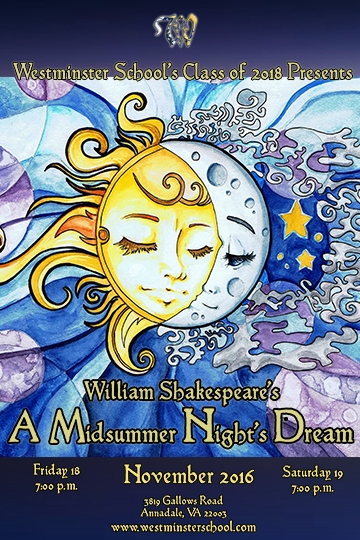
All of Athens prepares to celebrate the nuptials of Duke Theseus and the Amazon Queen, Hippolyta. Even a lowly group of workmen decide to put on a play in hopes of entertaining the Duke. Into this revelry comes Egeus, full of vexation with his daughter Hermia. She has refused to wed Demetrius, the young man her father has chosen, because she loves Lysander. In desperation, Hermia and Lysander decide to run away. Hermia’s best friend Helena, who is in love with Demetrius, tells him of Hermia and Lysander’s flight. As Demetrius pursues them, Helena follows him, hoping to win his love.
Within the woods, Oberon and Titania, the King and Queen of Fairies, are quarreling. To punish Titania, Oberon employs the juice of a magic flower to enchant her while she sleeps–upon awakening, she will fall in love with the next creature she sees. Meanwhile, having seen Demetrius scorn Helena, Oberon sends Puck to cast the same spell on the young Athenian. Mischievous Puck is not as careful as he should be, and confusion soon reigns.
How all these wrongs are set right; how the workmen fare in their play before the Duke; and how the “most rare vision” of a midsummer night dissolves into joyous day rounds out the tale of Shakespeare’s beloved play.

The Great Gatsby Gala
---------------------------------------------------------
Located in Westminster School's Gryphon Theater.
February 24, 2018
7pm - Midnight
---------------------------------------------------------
Tickets*
$50 for single ticket
$90 for couples
*tickets include substantial appetizers, dessert buffet, and complimentary
beer and wine along with a cash bar serving Roaring 20's Cocktails.
---------------------------------------------------------
Prepare for an extraordinary evening at Gatsby's Chateau.
You will be transported back in time to the 1920's. Voila!
The night is forever young and filled with excitement.
Let the festivities commence!
---------------------------------------------------------
Gatsby Party Attire:
1920's themed inspired fashion, Flapper Dresses, Black Tie.
Examples: Male Attire, Female Dress
---------------------------------------------------------

